segunda-feira, 27 de setembro de 2010

Steven Johnson: Where Good Ideas Come From

Steven Johnson: Where Good Ideas Come From: "

I love that he lifted RSI’s animated approach:


Beginning with Charles Darwin’s first encounter with the teeming ecosystem of the coral reef and drawing connections to the intellectual hyperproductivity of modern megacities and to the instant success of YouTube, Johnson shows us that the question we need to ask is, What kind of environment fosters the development of good ideas? His answers are never less than revelatory, convincing, and inspiring as Johnson identifies the seven key principles to the genesis of such ideas, and traces them across time and disciplines.


"

China reforça presença econômica na América Latina

China reforça presença econômica na América Latina: "

AFP

País que mais atrai empresas chinesas é o Brasil, por conta da necessidades de financiamento de infraestrutura

A China multiplicou ultimamente seus investimentos na América Latina no setor de mineração e hidrocarburetos, mas também em infraestruturas ferroviárias e siderurgia, reforçando e diversificando dessa maneira sua presença em uma região que registra um forte crescimento econômico, em especial o Brasil.


Nos últimos anos, os dirigentes chineses multiplicaram as visitas econômicas à América Latina, assinando acordos de investimento e exploração com países produtores de petróleo como Venezuela, México, Brasil, Argentina, Equador e Colômbia.


Em julho passado, a China entregou à Venezuela, país amigo, a primeira parte de um empréstimo de 20 bilhões de dólares para financiar 19 projetos de desenvolvimento.


Em abril, o gigante chinês CNPC anunciou que ia pagar um ticket de entrada de 900 milhões de dólares à Venezuela para ter acesso a uma reserva de petróleo na bacia do Orinoco.


Também em abril, um dirigente chinês anunciou que o Peru havia se convertido no principal receptor de capitais chineses na América Latina com 1,4 bilhão de dólares investidos, dos quais 1,1 bilhão em mineração.


No entanto, o país que mais atrai as empresas chinesas é o Brasil, devido especialmente a suas imensas necessidades de financiamento de infraestrutura.


'Mais de 50% das oportunidades de investimentos chineses na América Latina estão concentradas no Brasil', declarou à AFP Gerardo Mato, chefe da divisão latinoamericana do banco HSBC, no foro de investimentos China-América Latina, que foi realizado em Pequim há alguns dias.


Para a preparação do Mundial de 2014 e dos Jogos Olímpicos de 2016, ambos no Brasil, 'se fala de cifras que vão de 60 a 120 bilhões de dólares' e os chineses poderão levar sua parte, indicou o banqueiro.


A China não se contenta em comprar ferro brasileiro e sim começa a fabricar aço no Brasil, como ilustra o acordo assinado entre as empresas brasileira LLX e chinesa Wuhan Iron and Steel, que investirão 5 bilhões de dólares na construção de uma usina siderúrgica.


O interesse chinês abrange outros setores, como o das ferrovias, em particular trens de alta velocidade, no qual o líder francês TGV se vê desafiado por empresas chinesas nos projetos brasileiro Rio de Janeiro-São Paulo e argentino Buenos Aires-Córdoba.


Há algumas semanas, a China e a Argentina assinaram acordos no setor ferroviário por um total de 10 bilhões de dólares.


Por seu lado, as empresas latinoamericanas visam mais a buscar 'possibilidades de financiamento' para seu desenvolvimento em seus próprios países do que investir na China, indicou Mato.


Na semana passada, a brasileira Vale do Rio Doce, primeiro produtor mundial de ferro, anunciou que ia receber um empréstimo de 1,2 bilhão para financiar a construção de 12 embarcações de grande porte destinadas ao transporte do minério para China, sua principal cliente.


No final de 2009, a Petrobras obteve na china uma linha de crédito de 10 bilhões de dólares em dez anos, para financiar seu programa de investimento 2008-2013.


Os Estados Unidos, que exercem uma influencia predominante na América Latina, declararam que eram favoráveis aos investimentos chineses.


'Não se trata de uma ameaça', afirmou, em agosto passado, o secretário de Estado adjunto americano para a América Latina, Arturo Valenzuela, durante una visita de cinco dias à China.

"

What's holding back employment growth?

What's holding back employment growth?: "

I certainly agree that the most important factor holding back employment growth at the moment is low demand for firms' products and services. But I disagree with those who suggest that this is the only factor.


Paul Krugman declared last week:


Businesses aren't hiring because of poor sales, period, end of story.


The statement that businesses aren't hiring is simply false. According to the Bureau of Labor Statistics' Job Openings and Labor Turnover Survey, the U.S. private sector hired 3.9 million new workers every month, on average, over the first 7 months of 2010.


But if that's true, then why isn't total employment booming? The answer is that, according to the same JOLTS data, some 3.8 million workers quit or lost their jobs each month on average during Jan-July. The difference between gross new hires and gross separations was only enough to add about 100,000 net new private-sector jobs each month. There are some discrepancies between the extent of net job creation implied by the JOLTS data and the number inferred from other sources such as the BLS establishment survey. But the fact that small changes in net employment figures mask a dynamic economy in which there are huge gross changes in employment status for individuals and firms is quite indisputable.


For the establishments that are hiring millions of new workers every month, what factors went into their decision, and what would have to change to persuade them to hire more? I believe the correct answer is that the firms compared the benefits of hiring new workers against the costs, and decided it made sense to bring some 3.9 million new people on board each month, but no more.


And why no more than that? Paul's answer is based on
Catherine Rampell's observation that there has been a significant increase since 2007 in the fraction of small businesses reporting poor sales as their biggest single problem.


Source:
Economix.
sales_probs1_sept_10.jpg


But Russ Roberts isn't convinced.


It's also worth pointing out that 'biggest problem' doesn't mean that the second or third problems aren't important or aren’t really close to as important as the biggest. In fact,
if you look at just the latest data from the NFIB rather than the distracting previous three decades, you see this:


Source:
Cafe Hayek.
sales_probs2_sept_10.jpg


Yes, 31% of respondents do say that sales are their 'biggest problem.' That number hasn't budged much over the last year. But two numbers have changed a bit more than that-- 21% of respondents list taxes as their biggest problem up from 18% a year ago. And 15% list government regulations and red tape as their biggest problem, up from 11%. In fact, if there had been one category called 'Taxes and Government Regulations' it might have been seen as the biggest problem, listed by 36% of respondents, up from 29% in the year before and surpassing sales as the biggest problem.


I agree with Paul that a low level of demand is the most important factor holding back employment growth. But I think it may be a mistake to conclude from that fact that aggregate demand management is the only tool available to address the problem.

"

Cinco bancos concentram 75% dos depósitos no Brasil

Cinco bancos concentram 75% dos depósitos no Brasil: "

Por Fernando Nakagawa

Brasília - Cerca de dois terços de todos os ativos e empréstimos são de responsabilidade, atualmente, de apenas cinco instituições no País: Banco do Brasil, Itaú, Bradesco, Santander e Caixa Econômica Federal. Há dez anos, essas instituições tinham menos da metade do mercado. A concentração no sistema bancário brasileiro aumentou na saída da crise financeira, no ano passado, quando grandes bancos voltaram às compras e foram fechadas grandes fusões e aquisições.

O processo tem motivação econômica: maiores, os bancos têm o chamado ganho de escala, que é a redução proporcional do custo de sua operação. Eles conseguem ainda economizar em operações mais simples, como a de compra de material de escritório, e na montagem dos complexos sistemas de tecnologia da informação.

“Esse processo não é exclusividade dos bancos brasileiros nem do sistema financeiro. Para serem mais competitivos, muitos setores passaram por grande concentração, como telefonia, transporte aéreo, indústria farmacêutica”, enumera o presidente da Austin Rating, Erivelton Rodrigues. “É um ciclo que se autoalimenta. Maiores, os bancos têm mais fôlego para comprar outros ou crescer organicamente.”

A concentração bancária costuma ser observada pelos ativos - que são os créditos, direitos, bens e valores a receber que o banco detém. Por essa característica, a participação dos cinco grandes bancos passou de 45,6% em 2000 para 64,9% em junho de 2010. Em ritmo semelhante, as operações de crédito desse grupo saltaram de 49,2% para 65,5% de todo o sistema financeiro no mesmo período.

Anos 90

O professor de finanças da Escola de Administração da Fundação Getúlio Vargas (FGV-SP), José Pereira da Silva, afirma que essa concentração é resultado de um movimento amplo, iniciado há quase duas décadas. Em meados dos anos 90, após a criação do Plano Real, o governo decidiu reestruturar e fortalecer o sistema financeiro com a ajuda dos recursos públicos para impedir que a economia se contaminasse com eventual debilidade dos bancos. Em meio ao movimento, muitos bancos estaduais foram comprados.

No fim dos anos 90 e início dos anos 2000, a segunda fase da consolidação incluiu os bancos privados, que passaram a comprar casas menores para ganhar força e escala. Mais recentemente, houve outra onda que passou a contar também com aquisições de bancos públicos. “A concentração tem um aspecto positivo, que é de dar mais segurança para os clientes, já que bancos fortes têm menor risco na operação”, diz Silva.

Talvez seja por isso que é exatamente nesse tema que a concentração é mais evidente: atualmente, 75% de todos os depósitos do sistema financeiro estão nos cinco maiores bancos. Há dez anos, essa fatia era de 52,5%. Durante a crise, grandes bancos, em especial os públicos, receberam volumes expressivos de depósitos.

Mas a concentração tem um aspecto negativo para os clientes, que é a diminuição da concorrência. Com menos casas no mercado, a iniciativa de reduzir juros e taxas ou melhorar serviços pode ser menos urgente que em um cenário com muitas instituições. “É mais difícil concorrer quando você tem cinco ou seis bancos grandes. Mas isso não quer dizer não haja nenhuma concorrência”, diz Silva. Nos últimos dois anos, instituições públicas incentivaram a maior concorrência com a oferta de crédito com taxas menores.

"

ExpoMoney SP mantém foco em ações e atrai 20 mil investidores

ExpoMoney SP mantém foco em ações e atrai 20 mil investidores: "Maior feira gratuita de finanças pessoais e investimentos do País, a ExpoMoney se encerrou no último sábado repetindo em São Paulo a fórmula que já vem dando certo há oito anos: pôr à disposição dos investidores muitas informações sobre o mercado acionário. Em sua 50.ª edição, a feira trouxe mais"

ExpoMoney SP mantém foco em ações e atrai 20 mil investidores

ExpoMoney SP mantém foco em ações e atrai 20 mil investidores: "Maior feira gratuita de finanças pessoais e investimentos do País, a ExpoMoney se encerrou no último sábado repetindo em São Paulo a fórmula que já vem dando certo há oito anos: pôr à disposição dos investidores muitas informações sobre o mercado acionário. Em sua 50.ª edição, a feira trouxe mais"

Adjectives

Adjectives: "'Fucking ineffable' sounds like someone remembering how to do self-censorship halfway through a phrase."

domingo, 26 de setembro de 2010

Windows Phone 7 Developer Tools Released

Windows Phone 7 Developer Tools Released: "

I’m pleased to announce that today we shipped the final release of the Windows Phone 7 Developer Tools. You can download them here.

What is Included?

The Windows Phone 7 Developer Tools package includes everything you need to write awesome applications and games for Windows Phone 7. All of the tools included in it are absolutely free.

The following is installed with the download:

  • Visual Studio 2010 Express for Windows Phone – Free edition of VS 2010 for Phone development.
  • Express Blend 4 for Windows Phone – Free version of Blend for Windows Phone 7 Development.
  • Silverlight for Windows Phone 7 – Rich framework for building great applications for Windows Phone 7.
  • XNA Game Studio for Windows Phone 7 – Rich framework that enables you to build great 2D and 3D games for Windows Phone 7.
  • Windows Phone Emulator – A hardware accelerated emulator that allows you to run and debug your applications and games without requiring a phone.
  • Phone Registration Tool – When you get a device, this allows you to “unlock” the device so you can run/debug your application on it, using your Marketplace account.

All of the above tools and frameworks are packaged into one setup, and everything is free. If you already have Visual Studio 2010, the setup will also add support for Windows Phone 7 development and projects to your full Visual Studio 2010.

Applications and games you build with the tools released today can be uploaded to the Windows Phone Marketplace - which enables any phone consumer to easily download and purchase them directly from their phone. This provides a great way to distribute applications/games that you either get paid for or distribute for free.

Using the Windows Phone 7 Tools

VS 2010 Express for Windows Phone provides a rich development environment for building great phone applications.

Using File->New Project, you can choose from several Silverlight for Windows Phone starter templates when creating new projects. Today’s release adds support for new Panormana and Pivot controls and associated project templates that you can use to create applications that take advantage of these new Windows Phone 7 metaphors:

image

Selecting the “Panorama Application” template above will cause VS to create a fully working Silverlight for Windows Phone application that uses the Panorama UI metaphor (and the new Silverlight Panorama control):

image

Visual Studio provides a WYSIWYG design-surface (with split-view support for XAML source) for building phone applications using Silverlight. It also provides full code intellisense, debugger and developer tool support.

You can choose to deploy and debug an application on a physical phone device - or alternatively within a built-in phone emulator. Below is a screen-shot of the above application running inside the built-in emulator and being debugged by Visual Studio:

image

The phone emulator is hardware accelerated, and optionally supports multi-touch monitors (enabling you to easily simulate finger gestures).

Expression Blend for Phone

You can edit projects using both Visual Studio 2010 Express for Phone as well as with Expression Blend for Phone (which is also included for free in the download package). The project file format is the same for both tools - enabling you to create an application in one of the tools and then open it up and edit it in another.

Expression Blend for Phone provides a really powerful environment for creating interactive experiences:

image

It includes full designer support – including support for animations, storyboards, custom paths, and many other features. It also uses the same phone emulator as VS – enabling you to build and run applications without needing a physical device.

Great Applications Already Happening

We have had hundreds of thousands of downloads of the development tool previews – and are already seeing some awesome applications being built for the Windows Phone 7 launch.

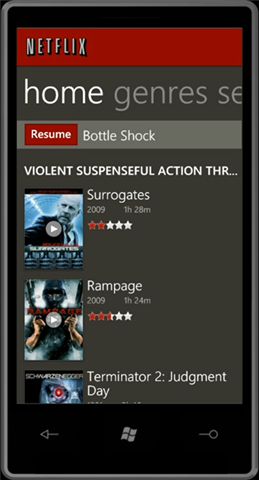
image

Below are some videos taken of a few applications running on actual Windows Phone 7 hardware devices connected to the web over 3G:

On YouTube, you can search the tag wp7dev to find other demos that have been posted by developers who have been using the previous previews – the demos posted include games, utility applications, data snacking applications, and more.

How to Start Building Windows Phone 7 Apps Now

If you’re a developer who has experience with .NET, Silverlight or XNA, you already have the core skills necessary to start writing a Windows Phone 7 application or game.

We’ve been working hard to get resources and information out to developers so they can be successful writing applications from day one. Since the Windows Phone 7 application platform is Silverlight-based, most articles or information about writing a great Silverlight application is also relevant to the phone. The same is true for XNA articles and information for building games.

Below are some Windows Phone 7 specific links to help get you started:

You can learn more about today’s release from the Windows Phone 7 Blog as well as from this Channel9 video that includes an interview from me.

Silverlight for Windows Phone 7 Toolkit

I’m also pleased to announce that we’re extending the popular Silverlight Toolkit concept to include Windows Phone 7 components as well, with a dedicated release that will be available to download here.

The Windows Phone 7 Toolkit includes the following additional Silverlight controls and components that are customized for the Windows Phone 7 experience:

  • ContextMenu
  • DatePicker
  • TimePicker
  • WrapPanel
  • ToggleSwitch
  • GestureService – adds events for Tap, DoubleTap, Hold, Drag (DragStarted, DragDelta, DragCompleted), Flick and Pinch

This library is delivered both as a binary, as well as with fully buildable and modifiable code licensed under the MS-PL license, and you are free to modify and/or include it in your applications.

You can learn more about using some of the cool controls in the Toolkit from:

Installation Notes

If you have installed previous preview releases of the tools, you will need to completely uninstall those before installing today’s final release. This is also true for the Zune Client if you’ve installed that as well (which is used to sync applications with real devices).

The download of the final Windows Phone 7 Developer Tools release is here.

Summary

We are really excited about the Windows Phone 7 release, and what it means for both consumers and developers.

Today’s tools release provides everything you need to get started building great Windows Phone 7 applications. We are looking forward to seeing what you create!

Hope this helps,

Scott

P.S. In addition to blogging, I am also now using Twitter for quick updates and to share links. Follow me at: twitter.com/scottgu

"

World Maker Faire NY exclusive: Netduino Plus with Ethernet and SD card support

World Maker Faire NY exclusive: Netduino Plus with Ethernet and SD card support: "

Netduino Plus


We're thrilled to announce that a limited number of early release Netduino Plus boards are being hand-delivered to the Maker Shed at World Maker Faire NY for sale this weekend. Find the Maker Shed on page 3 of map in the Program Guide (PDF).


The $59.95 Netduino Plus is the newest member of the Netduino family. It packs more features than the $34.95 Netduino, adding Ethernet (with a full TCP/IP stack) and a Micro SD card reader.


  • All Netduino features plus integrated Ethernet and Micro SD capabilities
  • Ethernet jack is low-profile and hard plastic; no worries about 'accidentally grounding/shorting' stack-on shields
  • Supports most Micro SD cards up to 2GB (FAT16/FAT32)
  • Netduino Plus is 100% open source - networking is lwIP (BSD license) and file system/SD card support is from Microsoft (Apache 2.0)


We're only getting a limited number of these for sale onsite this weekend, and they won't be in stock again until the holidays. These Netduino Plus boards are production versions of the hardware, but the firmware is in beta. You should expect a few quirks, but you'll be able to find help and updates in the Netduino Forums. A final version of the firmware is expected before the holidays.


Read the Full Story » | More on MAKE » | Comments » |


Read more articles in Maker Faire |


Digg this!"

Ubuntu Games: Nova versão: OpenSonic 0.1.4

Ubuntu Games: Nova versão: OpenSonic 0.1.4: "


Open Sonic é um jogo de código aberto baseado no universo do classico Sonic the Hedgehog.


O jogo apresenta um estilo diferente chamado jogo cooperativo, em que é possível controlar 3 personagens simultaneamente.


Diferentemente da maioria dos outros jogos semelhantes, Open Sonic fornece um nível maior de interação entre o jogador e os níveis.


É mais do que apenas um jump’n'run, o usuário deve vir acima com alguma estratégia a fim de obter através dos níveis.


Lançado dia 19 de setembro/2010 a nova versão do Open Sonic 0.1.4 e disponível para as plataformas: Windows, MacOSX e Gnu/Linux.


As principais caracteristicas adicionados são:


  • Open Sonic com melhor movimento no motor grafico em 360 ° graus.

  • Disponibilidade agora em nove idiomas: English, Portuguese-Brazil, French, Polish, German, Czech, Dutch, Indonesian, Italian.

  • Dois novos itens extras inovadores.

  • Novas fases adicionados.

  • Você pode criar seus próprios níveis usando o built-in editor de níveis.

  • Você pode fazer seus próprios itens personalizados, inimigos e bosses, usando o nosso objeto de script do sistema.

  • Resolvido o bugs anterior na parte do som e musicas do jogo, onde precisava fazer um comando para que funciona-se.

  • Melhorou o desempenho para computadores antigos.


Para instalar em sua distribuição Gnu/Linux, basta fazer o download abaixo.


DOWNLOAD: opensnc-linux-0.1.4.tar.gz


Agora descompacta o arquivo, abre a pasta opensnc-linux-0.1.4 e execute o binario opensonic_bin.


Em breve terá uma esta versão do OpenSonic, no site do Ubuntu Games. ;-)


Demonstração em Video:


http://www.youtube.com/watch?v=PytOb0Z8Vh8

"

Minha lista de blogs